


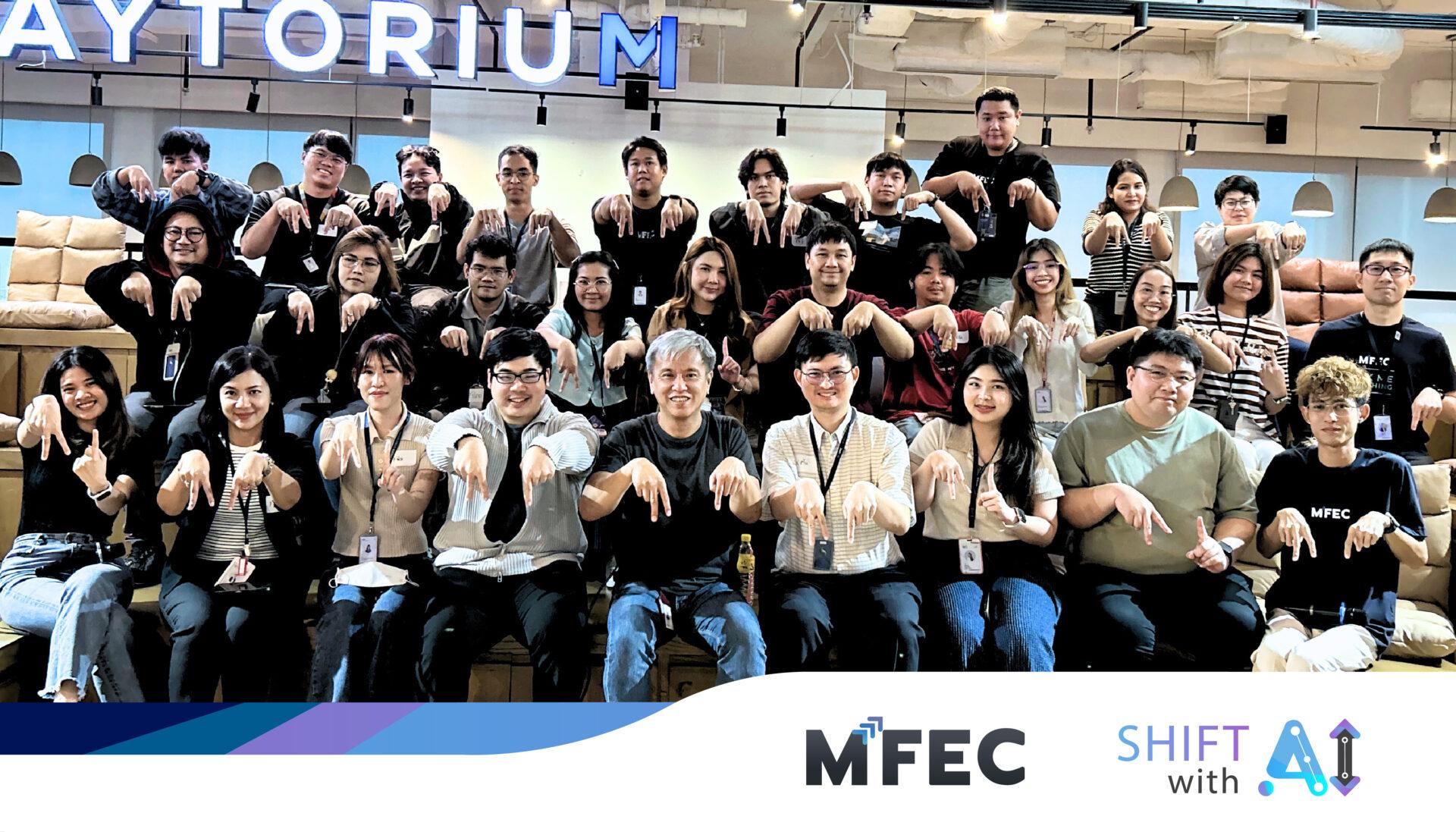

In an era where artificial intelligence has become a core driver of innovation and operations across various industries, at the event AI Revolution: Uplifting Our Future under the theme “AI Is Your Assistant, Not Your Master: Moving Forward Confidently,”our organization is not only committed to delivering AI solutions to our clients, but also to fostering the responsible and secure use of AI within the organization.
We emphasize safety by proactively managing potential risks associated with AI adoption and by establishing thoughtful standards for technology usage. At the same time, we are dedicated to empowering our internal teams with the most advanced tools—particularly by leveraging AI to support developers in working more efficiently, faster, and with greater ease.
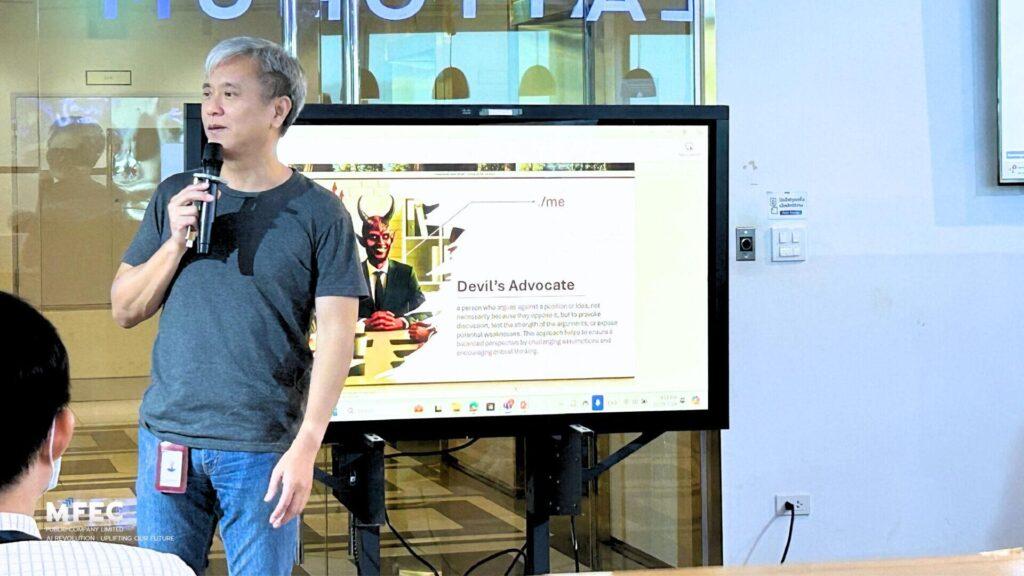
Mr. Damrongsak Ritanont stated that AI is a supporting tool—not a replacement for human thinking.
He emphasized that AI enhances work efficiency, particularly in managing vast amounts of data within a short period of time. AI also enables businesses to make faster and more accurate decisions, helping them stay ahead in a competitive market. However, AI still has limitations, especially in areas such as creativity and intuition, which cannot be fully replaced by machines. Therefore, the use of AI should carefully consider its potential impacts while striving to maximize its benefits.
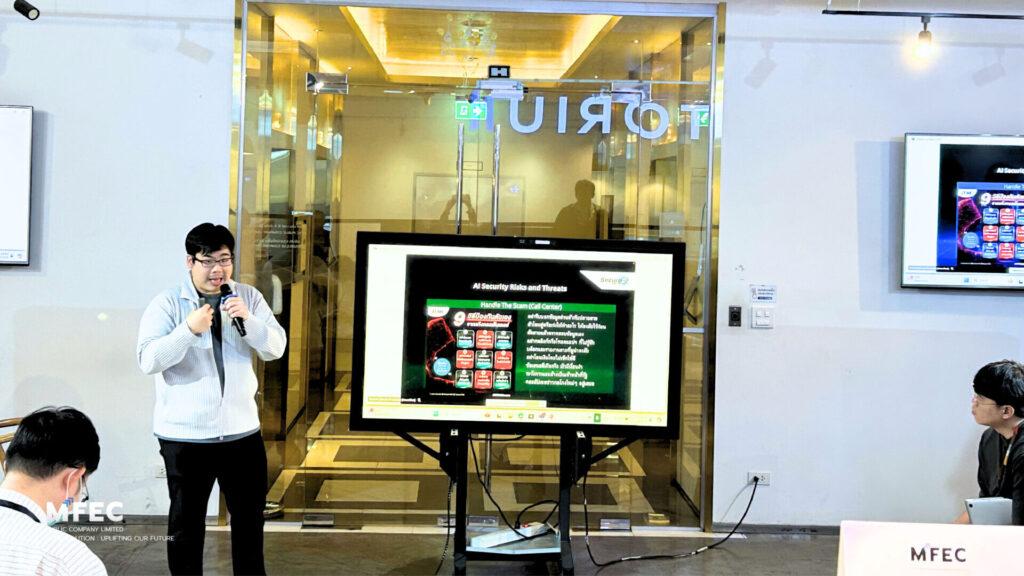
Mr. Sumet Jitphakdibodin spoke about AI and cyber threats.
He explained the cybersecurity risks that come with the use of AI, such as deepfakes and synthetic voice cloning, which can generate highly realistic fake images and audio. These technologies can be exploited for fraud and cyberattacks—for example, by impersonating someone’s voice to deceive recipients into disclosing sensitive information, or by creating convincing fake videos that lead to misinformation.
In addition, AI is increasingly being used in Phishing 2.0 and advanced social engineering tactics, making attacks more sophisticated and realistic. These methods often leverage personal data from social media to craft highly targeted and credible deceptive messages.
Key Takeaways from the Presentation
Deepfake and Synthetic Voice Cloning Techniques : AI is used to create highly accurate fake images and audio, making it easier to exploit these technologies in cyberattacks to confuse and deceive victims—for example, AI-based voice cloning for impersonation or the creation of highly realistic fake videos.
AI-Driven Phishing 2.0 and Advanced Social Engineering Tactics : AI enhances the realism of fraudulent messages and emails, such as spear phishing, by leveraging victims’ personal information obtained from social media to craft highly targeted and convincing content. The use of AI to synthesize personal data further makes detection and prevention more challenging.
Deepfake Detection Tools and Digital Forensics : Detection tools such as Resemble Detect use deep learning techniques to analyze audio and determine whether it is authentic or synthetic. Detect Fakes is a platform that trains users to distinguish between real images and AI-generated content. These tools help enhance awareness and skills in identifying fake content, ultimately improving user security.
During this session, both Mr. Damrongsak and Mr. Sumet emphasized that while AI is a powerful tool, its careful and ethical use is of utmost importance. Humans remain at the center of creativity and decision-making. Understanding the limitations and risks of AI helps create balance and safety across all dimensions, both at the organizational and societal levels.