



Why Traditional AI Investments Have Yet to Deliver Real Business Impact In recent years, Artificial Intelligence (AI) has become one of the top technology investment priorities for many organizations. Companies have adopted AI tools, provided employee training, and launched pilot projects across multiple departments. Yet a critical question continues to arise in many organizations: “Why have substantial AI investments still failed to generate clear business outcomes or measurable returns?” The answer may not be that AI is not ready — but rather that organizations are still viewing AI as playing too limited a role.

The Problem with a Tool-Centric AI Investment Approach
Many organizations begin their AI journey by asking which platform to adopt, which tool is trending, or which team should pilot it first. This approach often results in AI being deployed in silos.
As a result, AI may perform well within certain teams, but knowledge becomes concentrated among a few individuals or small groups. When personnel change or systems are replaced, organizations often have to start over from scratch. Most importantly, it becomes difficult to measure impact at the enterprise level.
Ultimately, AI risks becoming a “technology expense” rather than a strategic investment.
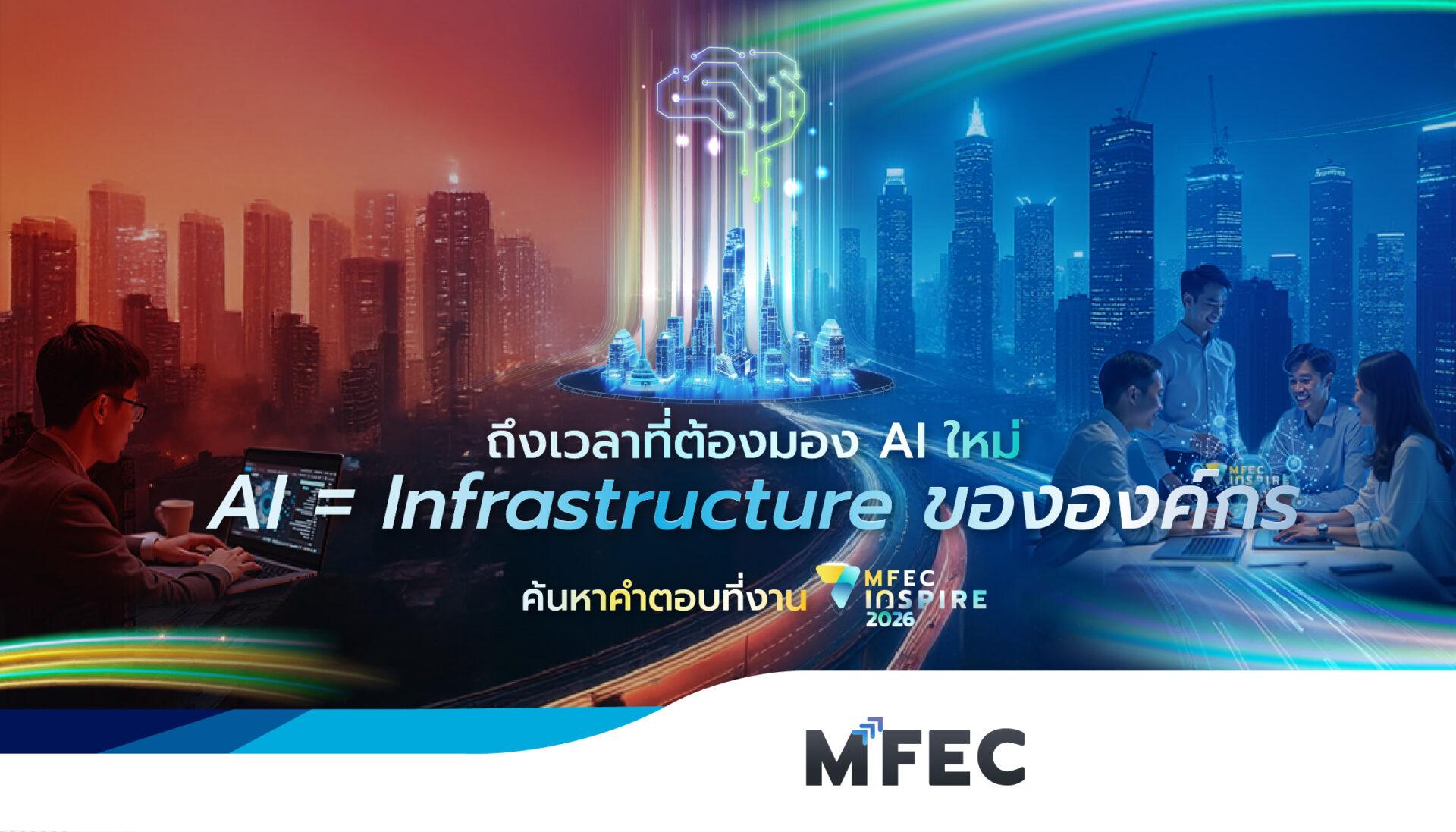
AI That Delivers Real Results Must Be Built as Organizational Infrastructure If we consider the foundational technologies that organizations cannot operate without—such as electricity systems, internet networks, or core IT systems—these are not designed for any single team. They are infrastructure that everyone across the organization relies on. AI that truly drives business outcomes must be designed in the same way. In other words: AI = Organizational Infrastructure.
AI at the Infrastructure Level Means
- Embedded into core business processes.
- Supports multiple roles and cross-functional teams.
- Operates continuously, even amid personnel changes.
- Can be governed, measured, and scaled at the enterprise level.
From Individual Skill Development to Team Learning Another major limitation of AI investment lies in focusing primarily on individual skill development. Many organizations send employees to AI training programs, but when they return to their daily work, the knowledge is often not applied—or cannot be scaled across teams. Enterprise-level AI requires a shift in mindset: from Individual Skill to Team Learning. When AI is designed as infrastructure, knowledge is embedded within systems rather than residing solely with individuals. New teams can begin using AI capabilities immediately, without starting from scratch. This approach reduces reliance on specific experts and accelerates the overall operational speed of the organization.
AI Infrastructure Must Be Connected to Business Outcomes
The core of AI Infrastructure is not technological sophistication, but the ability to connect AI to measurable business outcomes, such as:
-
Cost optimization
-
Faster decision-making
-
Reduction of redundant processes
-
Improved customer service efficiency
-
Enhanced employee productivity
If AI cannot effectively address these objectives, then it has not yet truly become part of the organization’s infrastructure.
It’s Time to Rethink AI Investment Principles
AI is not a ready-made solution. But AI designed as infrastructure is a critical foundation for future-ready organizations.
The key question, therefore, is no longer: “Does your organization have AI yet?”
But rather:
Is the AI your organization is using truly making the organization work better?
And that is the true starting point of AI investment—one that is not just modern, but capable of delivering real business impact.