



As a People Team that has spoken with employees across multiple teams, we sensed that when AI first arrived as a new “team member,” it brought mixed emotions. There was excitement (to learn how to use it), confusion (where exactly should we apply it?), and deep down, quiet concern (will this AI replace us?).
As time passed and AI evolved from being the “new kid” to becoming part of everyday use, many organizations began to see real results in cost savings and productivity gains.
However, the common approach many organizations take is rushing to the end goal. We instinctively believe that technology is the answer to every question — whether that means purchasing an AI tool, distributing AI accounts to employees, or organizing prompt-engineering training sessions.
Now that employees are using AI fluently and AI has become highly capable
why do most employees still feel just as exhausted — or even more so?
The overall outcome shows that while employees are indeed using AI more, no one feels that their workload has decreased. Some people complete tasks much faster, while others actually spend more time refining and adjusting AI-generated outputs. From an organizational perspective, executives begin asking: Where is the real impact?
This article invites everyone to revisit a key point that many may have overlooked.
When we welcomed a new “team member” named AI, did we seriously design its job scope and responsibilities?
From the People Team’s perspective, maximizing AI’s impact is not about personal usage. It’s about building a work system that gives employees confidence that AI will truly enhance their work — not replace them. Most importantly, we must clearly answer this question: When AI saves time, where does that time go? And how do we reinvest it to create new value for the organization, instead of letting it disappear into the same old processes?
Our secret sauce is not about tools — it’s about rethinking first. Before investing in any technology or purchasing an AI solution, organizations should start by understanding and redesigning the entire workflow. Identify which processes need change and which groups of people are ready — then select the right technology to support them in the right way.
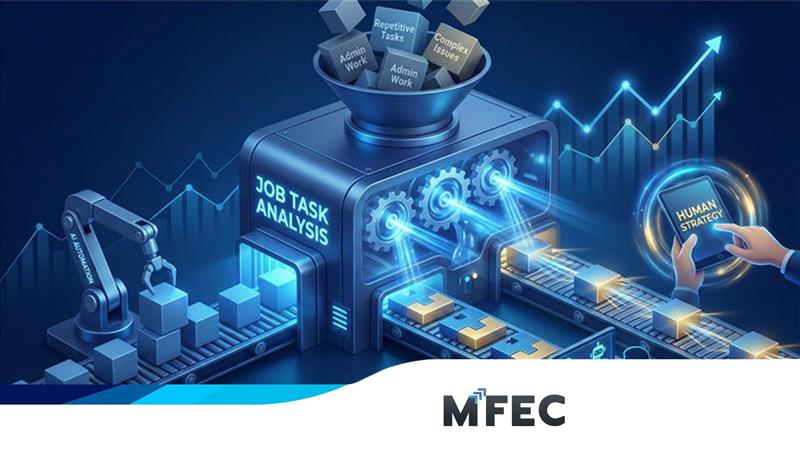
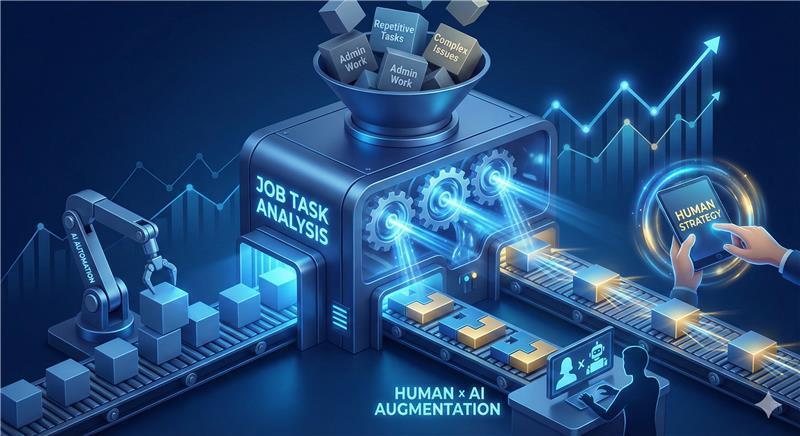
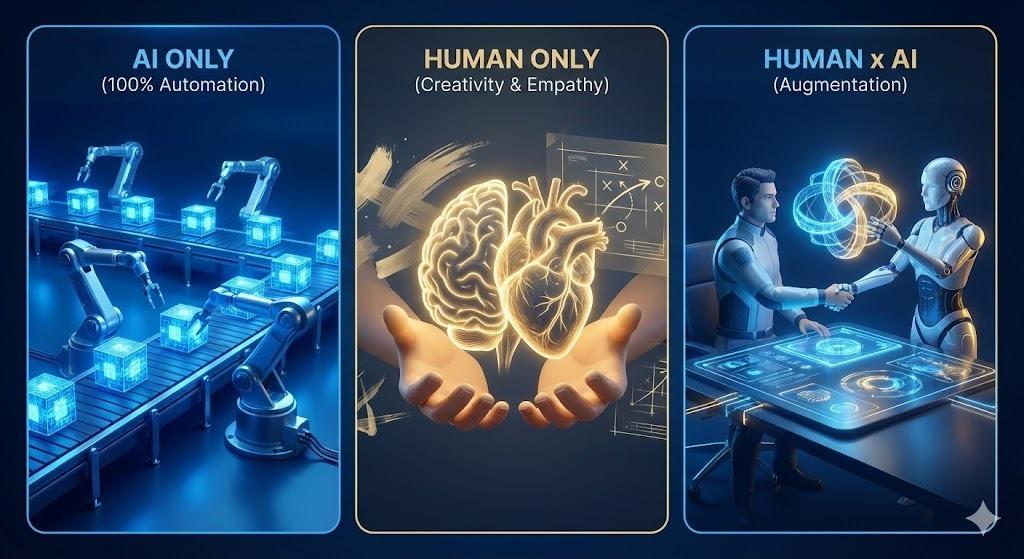
The tool our People Team uses to manage this is called Job Task Analysis. It involves breaking down daily tasks into smaller components and reexamining the entire workload by analyzing:
- Which tasks should be handled 100% by AI
- Which tasks should remain strictly human
- Which tasks work best as Human × AI collaboration
The outcome goes beyond identifying where AI should be applied. We gain unprecedented clarity into how the team spends time. We uncover valuable — and sometimes surprising — insights. For example, tasks that consume significant time but generate minimal value, or overlapping processes that create unnecessary handovers and redundancies. These are the real reasons why AI adoption does not automatically reduce workload.
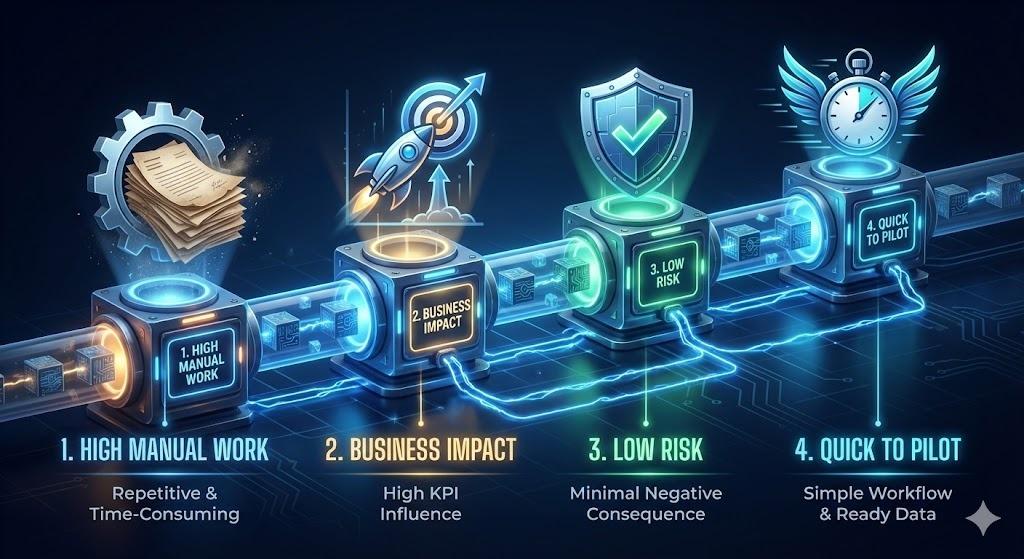
Once all tasks are mapped out, the question becomes: If we want AI transformation to create a significant organizational impact, where should we start? Our team uses four criteria to prioritize tasks:
-
High Manual Work – Time-consuming, repetitive routine tasks
-
Business Impact – Tasks directly tied to company KPIs or high business value
-
Low Risk – Tasks with minimal organizational risk if errors occur
-
Quick to Pilot – Simple workflows with readily available data
At this point, you may wonder: What were the results? We didn’t just present a model — we tested it within our own People Team first to ensure that every step truly works and can be effectively applied to other teams.
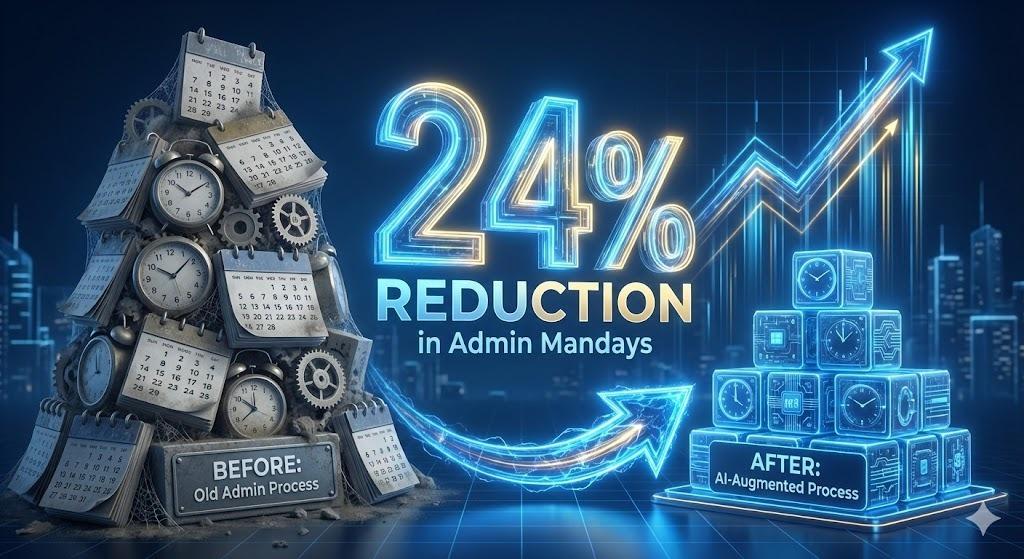
The results: After conducting Job Task Analysis and redesigning processes, the People Team reduced administrative mandays by over 24%. For example, repetitive inquiries that once consumed significant time are now handled by AI, allowing team members to focus more on strategic Organizational Development (OD) initiatives.
What we’re most proud of isn’t just the reduction in mandays. The team shifted its focus toward people care and strategic planning, moving from a back-office support function to a front-line partner working closely with Business Units. The team became significantly more agile, with increased job rotation and internal flexibility. Some members expanded beyond traditional role boundaries, taking on multi-roles and developing new capabilities.
Job Task Analysis may sound detailed and energy-intensive — and it is. But ultimately, it lays the foundation for systematically welcoming a new team member called AI.
When work is properly designed, AI adoption becomes more than workload reduction. It becomes a strategic move — transforming a team from one that chases technology into one that is ready for any future change, whether the next “team member” is AI or any other emerging technology.
Writer:
Chonphicha Nakro (Toey)
Talent Acquisition Manager