


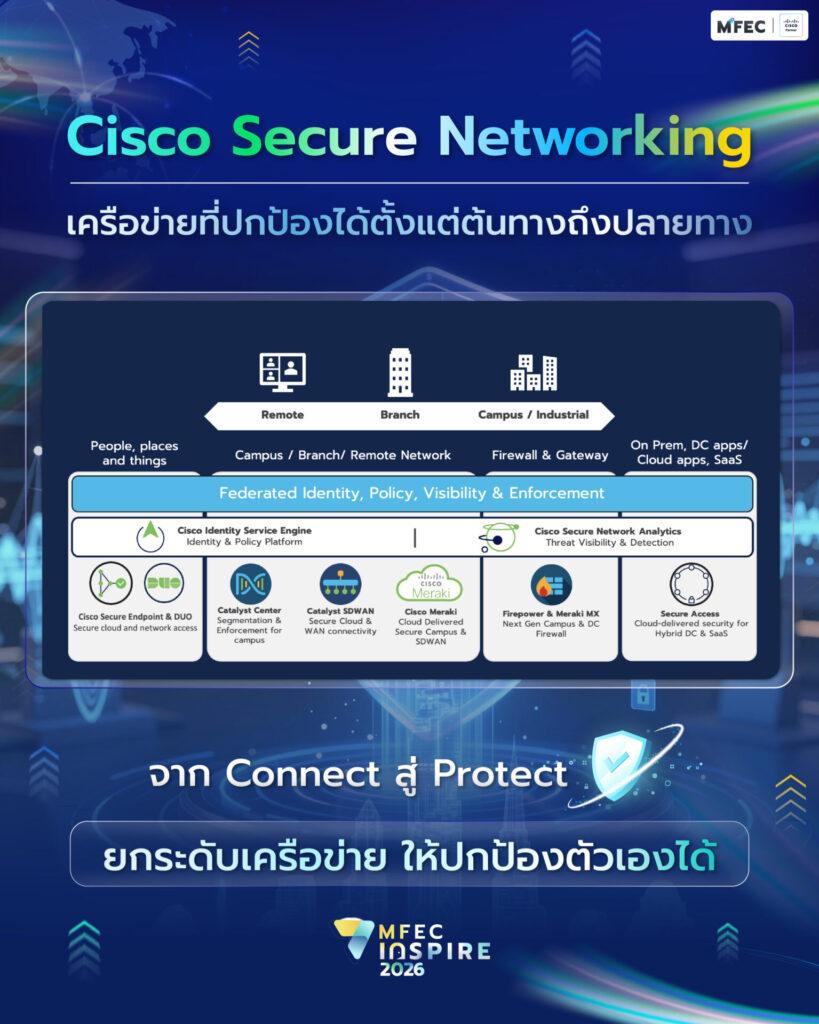
From Connect to Protect: A Deep Dive into Cisco Secure Networking.
How is it different from a normal network?
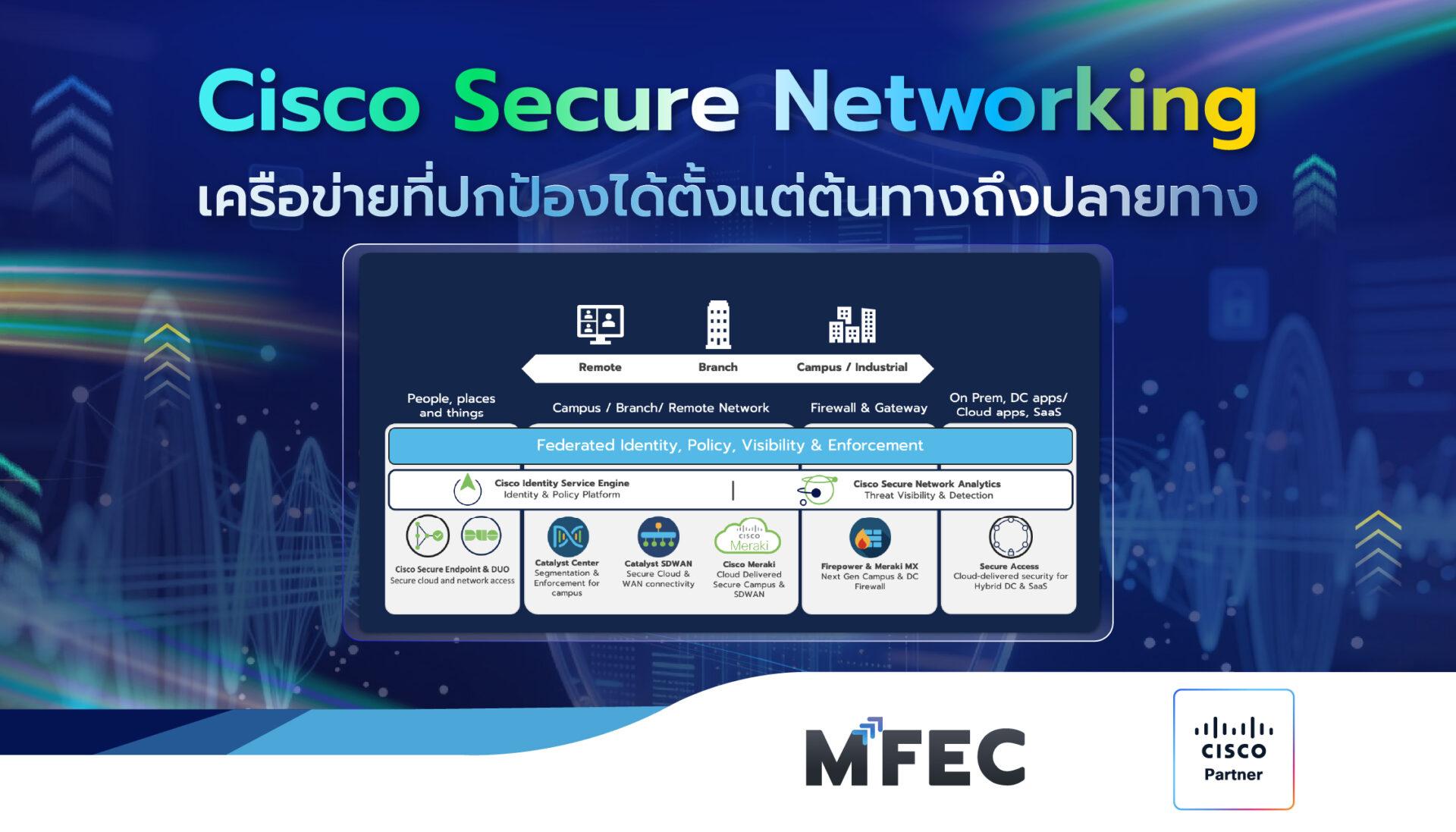
Cisco Secure Networking is a network system that can protect itself and also protect those who use the network path—whether they are internal users within the organization (Users), external users who connect to the network (Guests), or various devices and objects (Things). Regardless of what connects to the network, it should be verified, granted access according to the policies defined by the IT department, and the system should be ready to alert administrators if any abnormal behavior is detected.
Cisco has integrated the Zero Trust concept into both hardware and software, emphasizing the principle that “no one should be trusted until they have been verified.”
- Visibility: The ability to see every connection, whether it originates from home, the office, or the cloud.
- Micro-segmentation: The practice of dividing the network into smaller segments to prevent threats from spreading (Lateral Movement) when a security incident occurs.
- Enforcement: The automatic enforcement of security policies through Cisco Identity Services Engine (ISE) or Cisco Catalyst Center.
At this point, many of you may be wondering: In which use cases can we implement Secure Networking? Or is it suitable for your organization?
Secure Campus is an example where security is embedded within the network infrastructure and operates to protect and manage data from the beginning of the connection until it reaches its destination.
Starting from the onboarding process, if any abnormalities are detected, access will not be granted. However, even after access has been approved, the system does not stop at onboarding security. It continues to monitor user behavior, and if any unusual activity is detected, it will immediately alert the system administrator.
In terms of security policy management, Cisco Secure Networking enables administrators within an organization to manage risks and segment systems into smaller parts very easily by using Tags, known as Security Group Tag (SGT). This approach not only helps limit the spread of threats if a security incident occurs, but it is also designed to simplify administration. Additionally, it works in a dynamic manner, meaning that policies can still be applied no matter where the user is connected from.
Secure Branch: Security for network connections from branch offices.
Whether connecting to the Internet or back to the headquarters, Cisco Cisco SD-WAN enhances security by providing a comprehensive platform that works seamlessly with Cisco Security. In addition, Cisco SD-WAN supports multiple management models, including On-Premises and On-Cloud, allowing organizations to choose the approach that best fits their needs. This ensures that connections from every branch are both secure and high-performing.
Secure Remote: Security for users working or connecting from outside the workplace.
In addition to branch connectivity, organizations must also ensure the security of users working outside the workplace. With Cisco Secure Access, organizations can define secure access policies that follow the same security standards. This enables remote users to connect securely, easily, and with confidence in every use.
All of these elements combined make Cisco Secure Networking a platform that can meet the needs of your organization—not only providing connectivity, but also delivering strong security.
Another key advantage of being a platform that Cisco provides is the integration of Cisco + Splunk. When networking works together with the power of a data platform, it creates new possibilities. In the era of Digital Transformation, networking is no longer just a “path” for transmitting data. Instead, it has become the “first line of defense” and one of the largest sources of data within an organization. When Cisco and Splunk come together, it enables a transformation from isolated IT systems (silos) to a fully integrated era of Unified Security & Observability. By combining the strengths of networking and a data platform, this creates what can truly be called a Unified Platform.