



สำหรับเนื้อหา Blog ที่มีความต่อเนื่องและดูเป็นมืออาชีพ (Professional Tone) แนะนำให้ใช้เวอร์ชันนี้ครับ: “In a data-driven digital world, businesses face multifaceted challenges. Over the past few years, AI has become a central topic in nearly every boardroom. Executives discuss its potential, investors expect results, and competitors seem to be moving faster every day. Consequently, many organizations have committed to serious AI investments—launching pilot projects, implementing new tools, and continuously upskilling their workforce.
Yet, as time passes, the simplest question has become the most difficult to answer: ‘Is the AI we are implementing actually delivering tangible results for the business?
A sense of uncertainty is beginning to permeate many organizations. While activity reports show high usage and projects look cutting-edge on the surface, the clarity vanishes when viewed through the lens of profitability, costs, or competitive advantage. Many still struggle to pinpoint exactly where the ROI from their AI initiatives lies.
The hard truth we must accept is that the problem does not lie in a lack of potential within AI technology. On the contrary, AI is an incredibly powerful tool—capable of analyzing massive datasets, automating redundant tasks, enhancing decision-making precision, and boosting productivity across multiple dimensions.
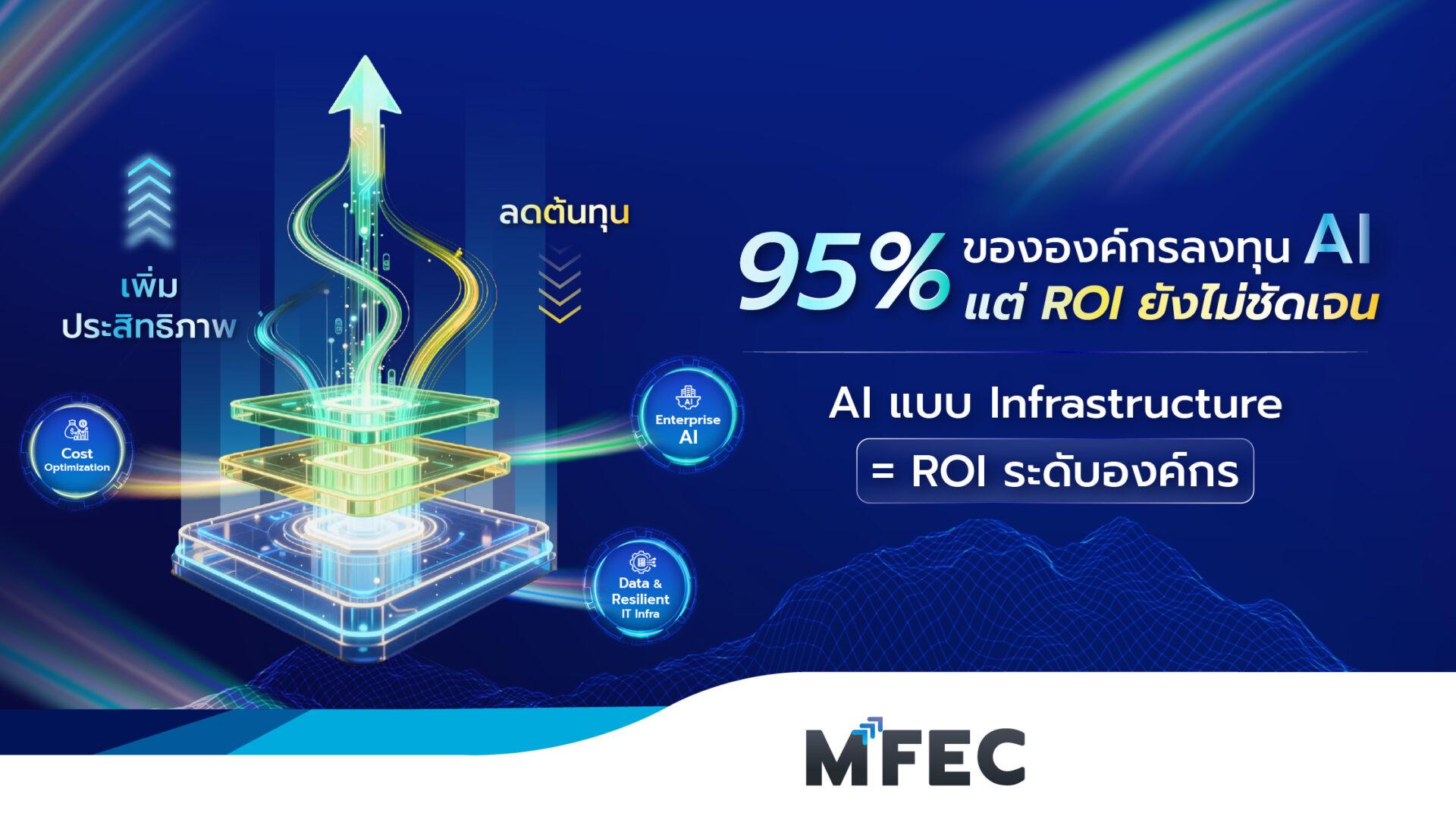
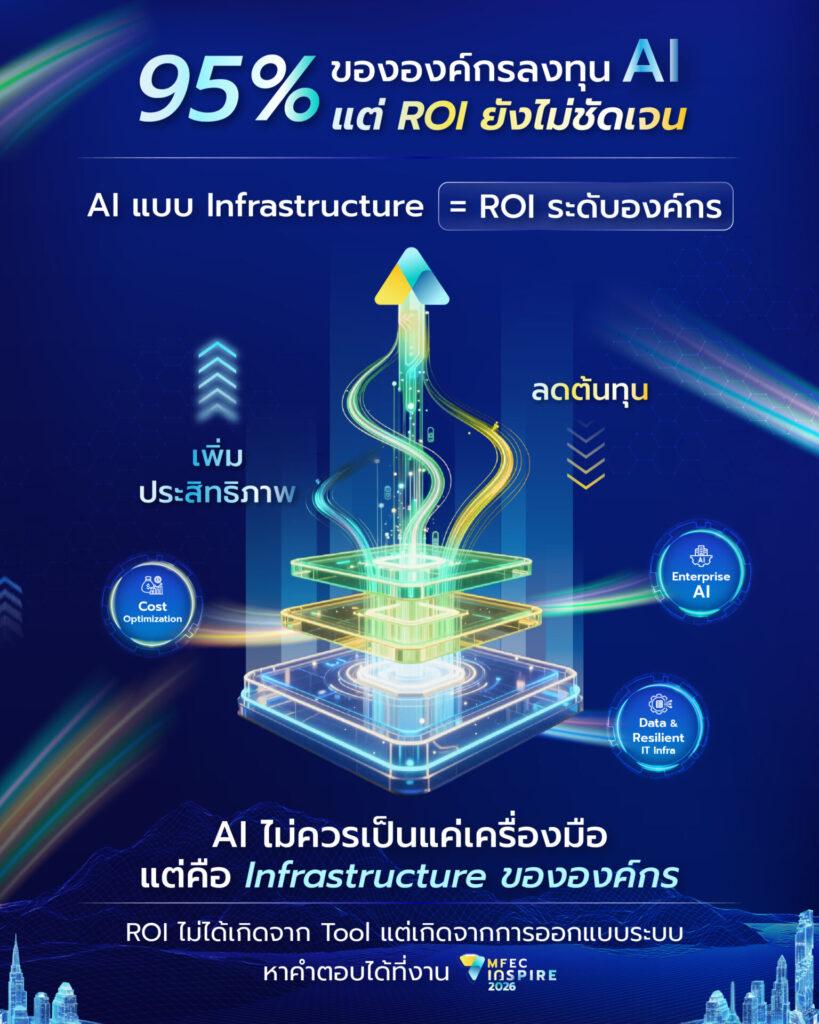
The missing ROI is rarely caused by the AI itself, but rather by ‘how organizations choose to implement it.
Driven by the ‘Fear Of Missing Out’ (FOMO) and the desire to stay ahead of competitors, many organizations rush into pilot projects, adopt new tools, or allow specific teams to experiment early on. While this creates initial momentum, it often leads to AI being deployed in silos. The technology performs well for isolated teams but remains disconnected from the organization’s overarching business goals.
What many organizations overlook is that AI ROI only materializes when technology is woven into core business processes, rather than treated as a standalone pilot or a temporary add-on. AI must deliver tangible improvements to day-to-day operations—whether by automating time-consuming steps, reducing manual errors, accelerating team workflows, or empowering leadership to make data-driven decisions with greater precision.
When AI is seamlessly integrated into core operations, results manifest as reduced costs, time savings, and enhanced efficiency. As these outcomes scale across various departments, ROI ceases to be a matter of guesswork—it becomes a verifiable metric that can be reported with confidence.
Another critical but often overlooked point is that effective AI must not depend on a select few. If an organization relies solely on a handful of AI experts without a system designed for team-wide adoption, the results remain limited. Furthermore, when key personnel leave, the organization is forced to start over. To generate true enterprise-grade ROI, AI must be designed for continuous, cross-departmental use and built to scale sustainably in the long term.
From a leadership perspective, the critical question is no longer ‘Which tools should we acquire next?’ but rather ‘Where exactly will AI reduce our costs, how will it enhance our efficiency, and what specific metrics will we use to measure success?’ If the answers remain unclear, it is a definitive sign that AI has not yet been strategically aligned with the business at the appropriate level.
Achieving AI ROI is not merely a technological endeavor; it is about designing systems that align with business objectives. A partner who can truly deliver value must deeply understand both the technology and the business context—seamlessly integrating AI into existing infrastructures and establishing metrics that accurately reflect real business impact.
AI should not be viewed as a cost burden driven by market trends or external pressure. Instead, it must serve as a core engine that strengthens the organization—reducing costs, accelerating speed-to-market, and enhancing long-term competitiveness. Ultimately, the difference between an organization that sees AI as an expense and one that sees a clear ROI lies not in the size of the budget, but in the mindset and design implemented from the very beginning.
Ultimately, the critical question is not how much your organization has invested in AI, but whether the AI you are using is delivering measurable results. If the answer remains unclear, now is the perfect time to re-evaluate your approach—ensuring that AI is not just a cutting-edge technology, but a strategic tool that generates genuine business value.
MFEC Inspire 2026 – Empowering Tomorrow’s Enterprise with AI
A showcase of cutting-edge IT solutions, featuring real-world use cases and proven business outcomes.
This stage is not just about sparking ideas; it is about helping your organization set a clear and correct course for AI investment.
Ready to move forward in an even more challenging world.